Information Arquitecture
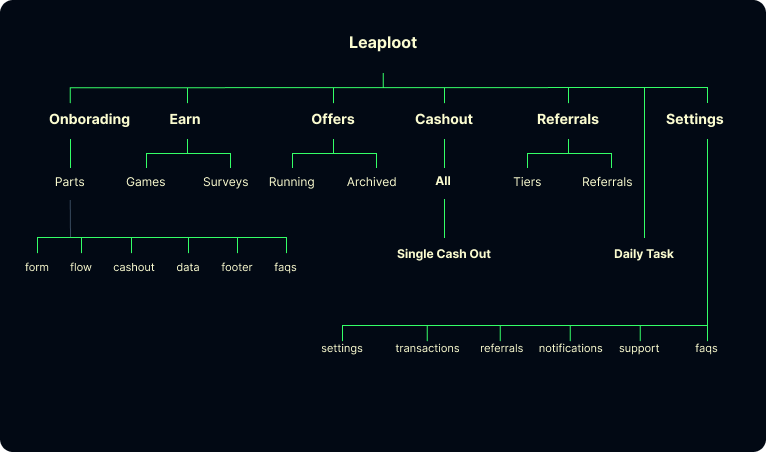
The experience is structured around a closed earning loop guiding users through clear progression:
Earn → Activity → Cashout → Referrals → Settings.
This ensures clarity, scalability, and continuous engagement.
.
Behavior-driven earning platform redesigned to increase activation, retention, and user trust through structured progression and friction reduction.
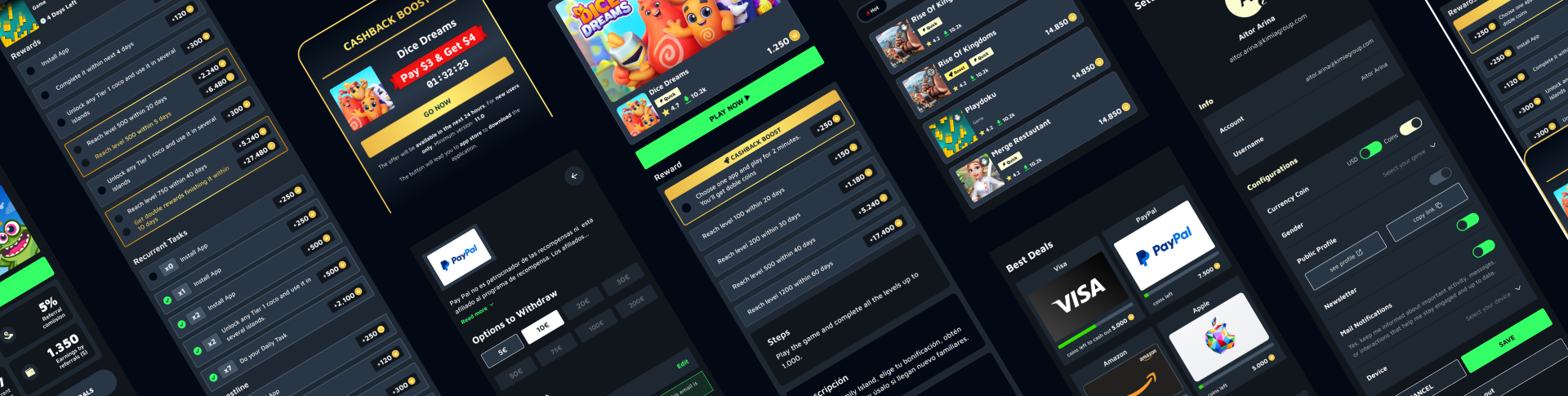

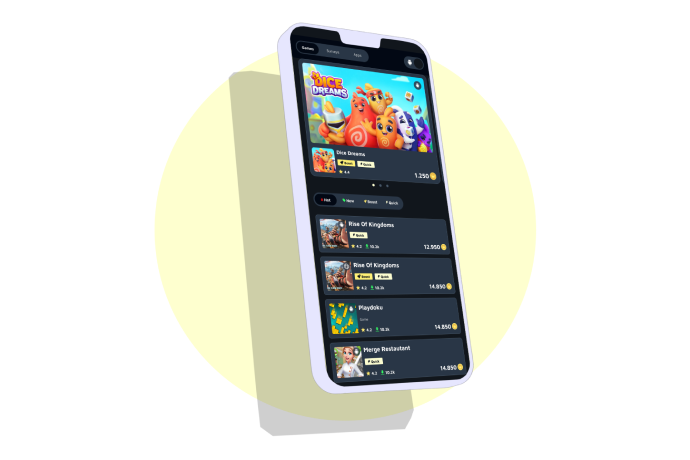
LeapLoot is a mobile-first earning platform where users complete game-based tasks to earn real money.
The product had strong acquisition but weak behavioral performance:
Low activation and retention
High confusion and support volume
The redesign focused on transforming LeapLoot into a structured earning loop optimized for clarity, motivation, and progression.
In this project, I was responsible for the whole design process and:
Design of a scalable behavioral UX architecture for a reward-based earning platform.
Redesign of core earning, offer detail, and cashout flows to increase activation and retention.
Implementation of progressive disclosure to reduce cognitive load in high-density mobile screens.
Creation of a modular component system to support rapid iteration without a formal design system.
Direct collaboration with Frontend (Vue + Tailwind) to ensure accurate implementation and state consistency.
Before the redesign, the product faced strong acquisition but poor behavioral performance.
Key issues included:
The approach focused on restructuring the earning logic and user progression model before addressing visual design.
 Challenge Solution
 The experience is structured around a closed earning loop guiding users through clear progression:
Earn → Activity → Cashout → Referrals → Settings.
.
Navigation was simplified to prioritize earning actions and reduce friction between discovery and execution.
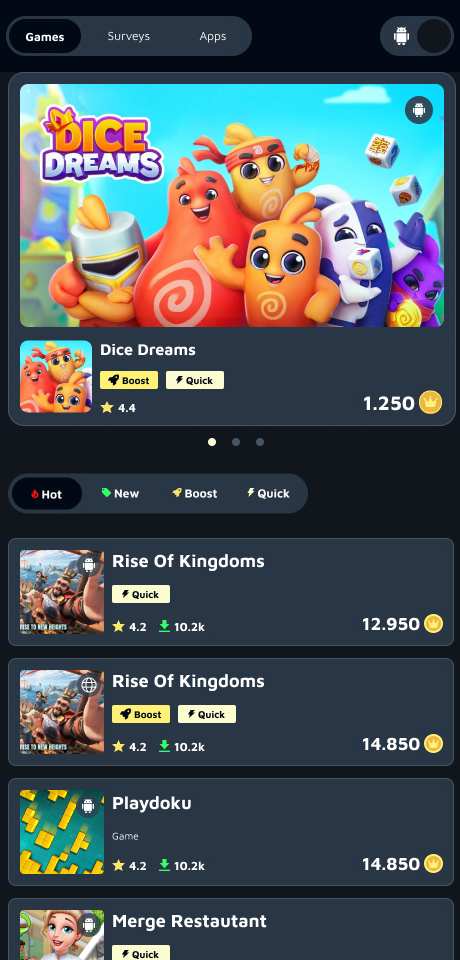
Content categorization (Featured, Hot, New, Boost, Fast) improves scanability and accelerates decision-making on small screens.
Filtering and sorting patterns were unified to maintain consistency across content types and prevent navigation ambiguity.
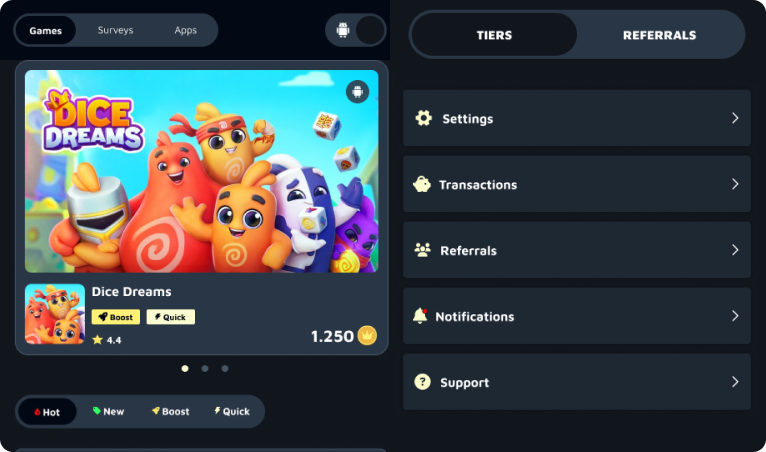
Consistent component behavior was introduced across dropdowns, toggles, selectors, and state-based elements.
Clear system states (Running, Paid, Expired, Canceled) reduce ambiguity in task progression.
Disabled states and eligibility messaging were standardized to reinforce clarity in reward and cashout flows.
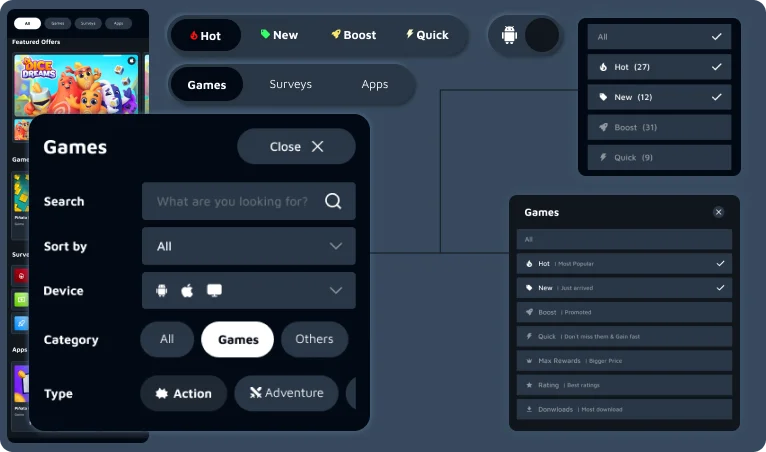
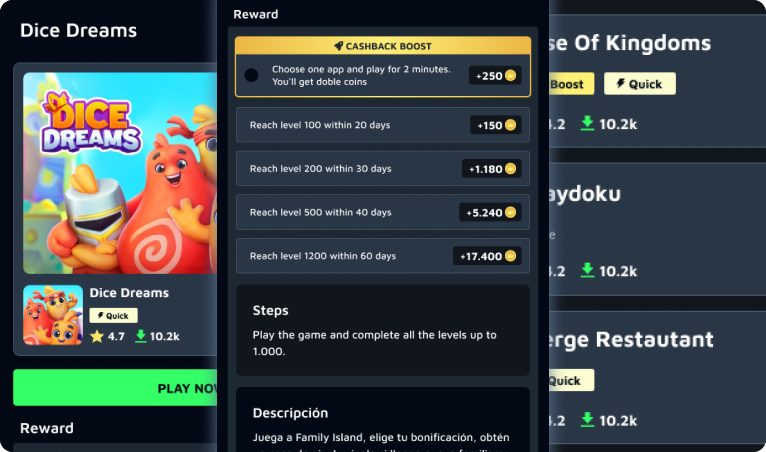
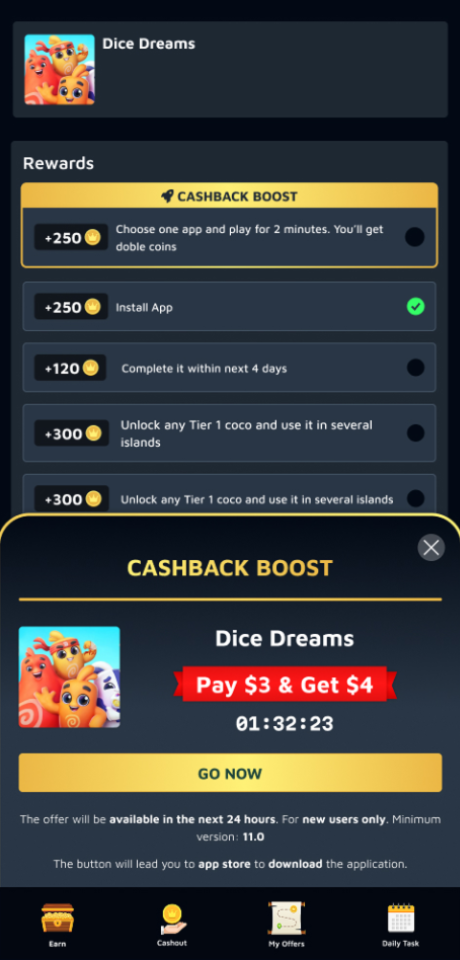
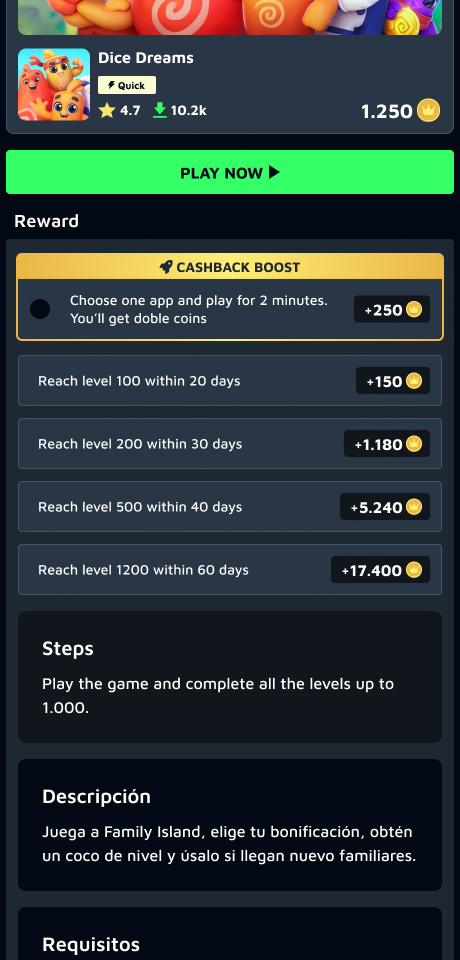
Offer details were modularized using progressive disclosure to prevent cognitive overload.
Reward logic, recurrent tasks, questlines, and step requirements were separated into structured layers.
Persistent continuation CTAs reinforce forward momentum within the earning loop.
The experience was optimized for ultra-small mobile screens while preserving clarity and hierarchy.
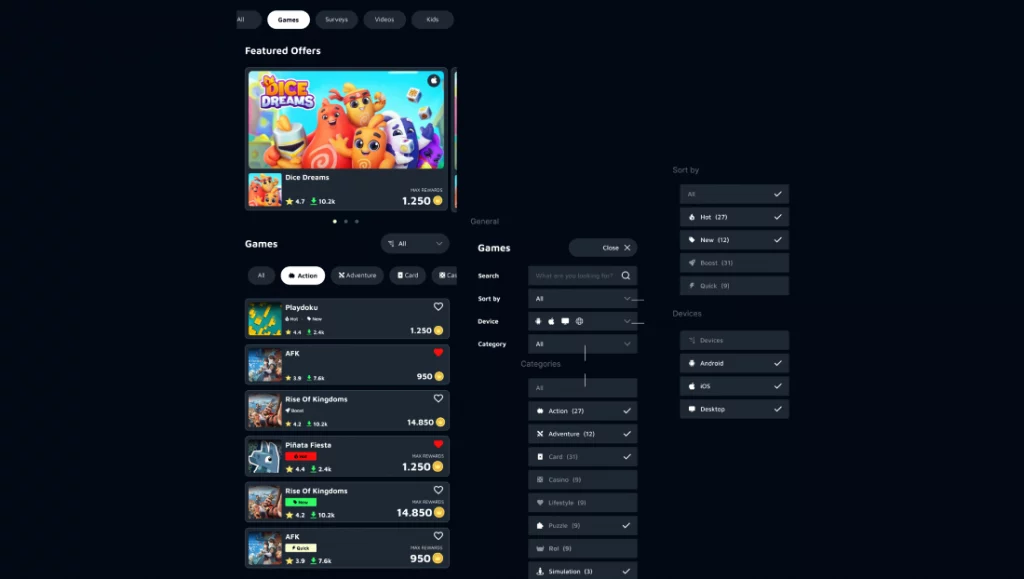
Organizes a large volume of opportunities into a structured discovery system, enabling efficient navigation across multiple content types.
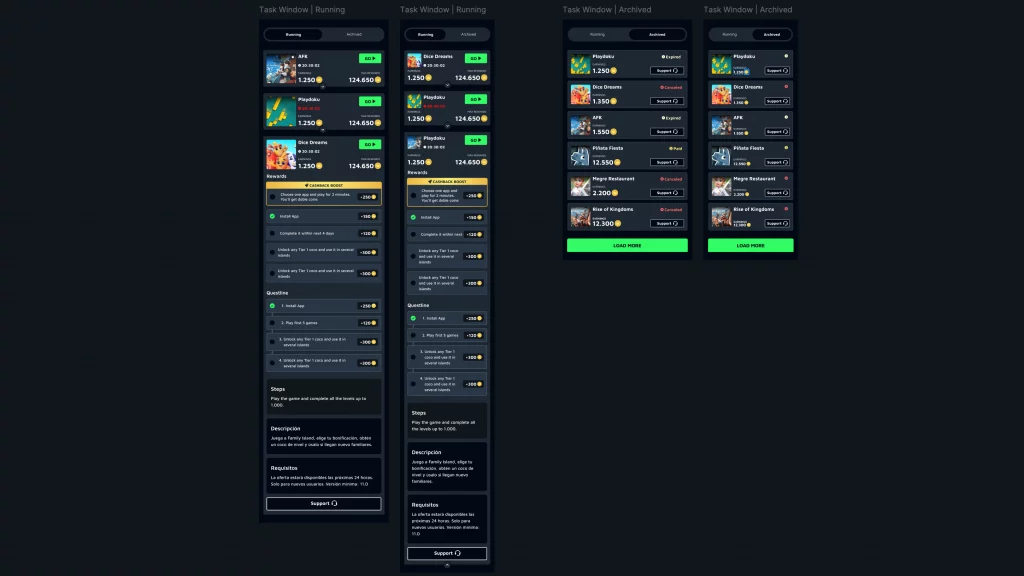
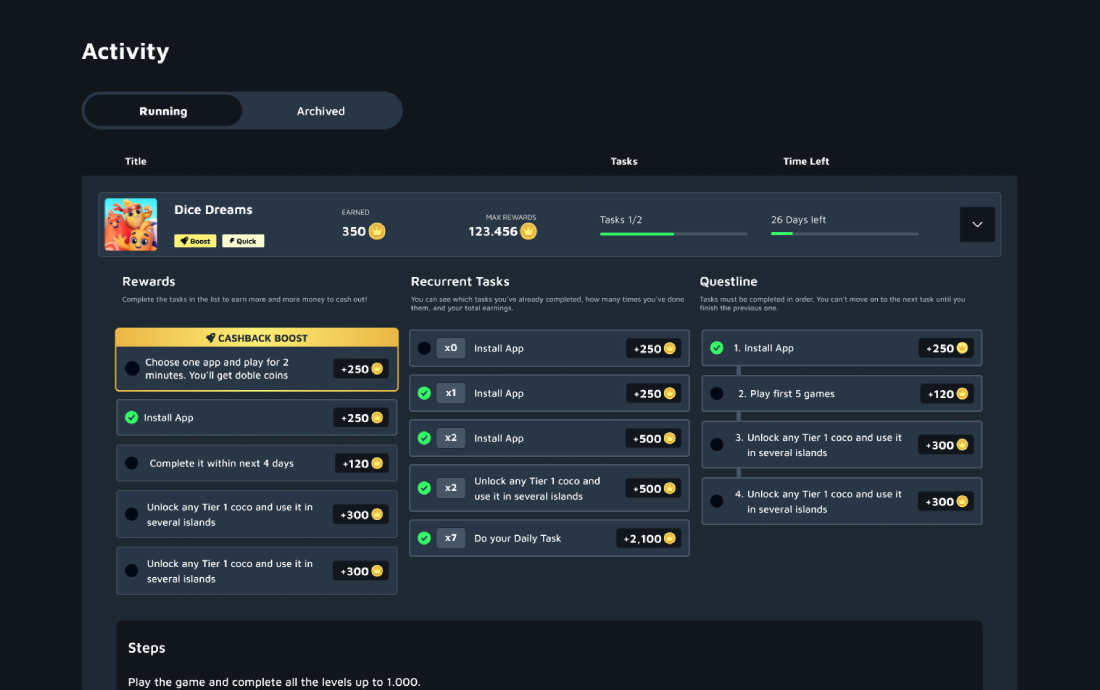
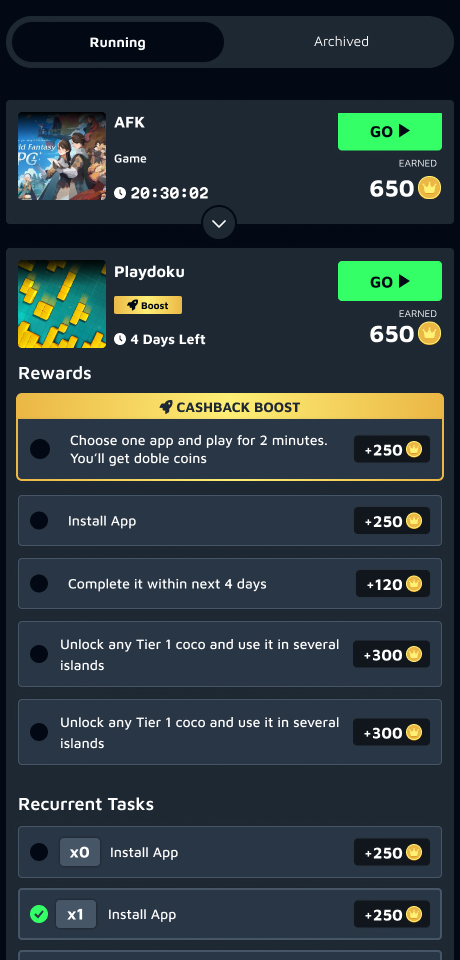
Expandable card showing real-time progress, rewards, and task breakdown within active offers
Structured card displaying active user progress within ongoing offers.
The component consolidates key information into a compact layout:
current reward accumulation, total potential reward, remaining time, and a direct CTA to resume gameplay.
An expandable interaction reveals deeper task-level details, including completed steps, remaining actions, and contextual information, enabling users to understand progress without leaving the flow.
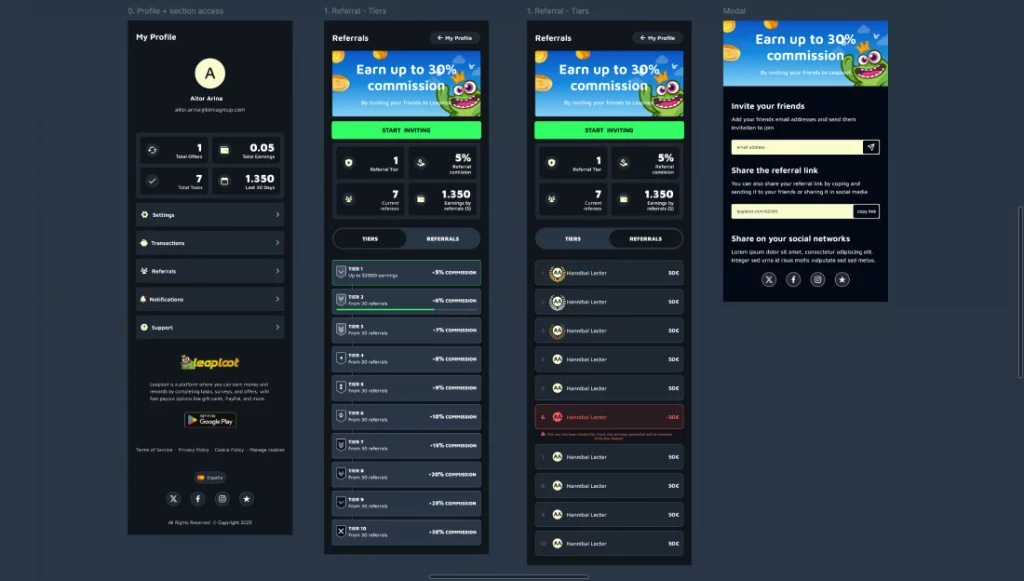
Reducing Cognitive Load
Transforms referral logic into a transparent and motivating system, making earnings, tiers, and progress clearly visible.
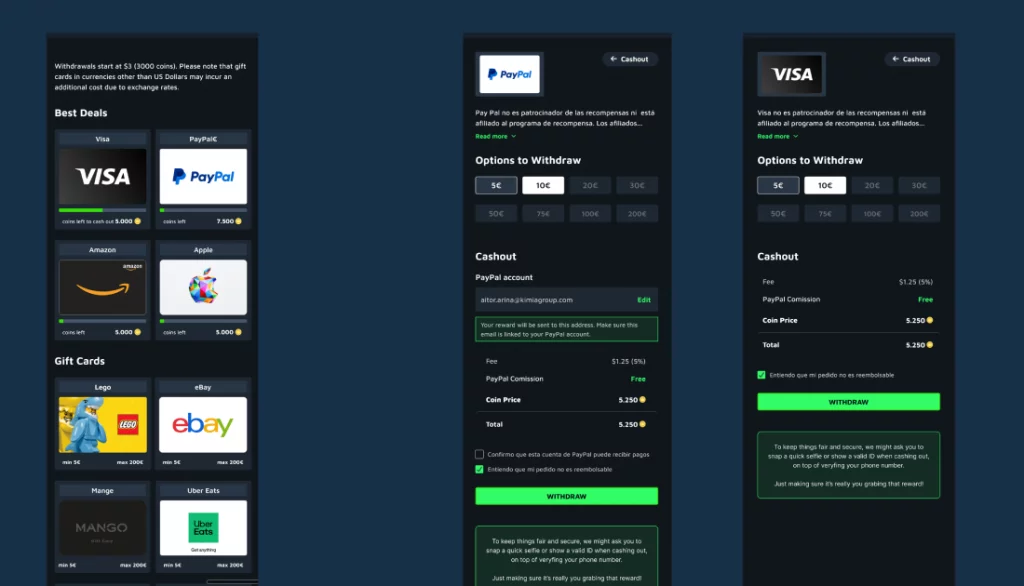
Global & Single Page
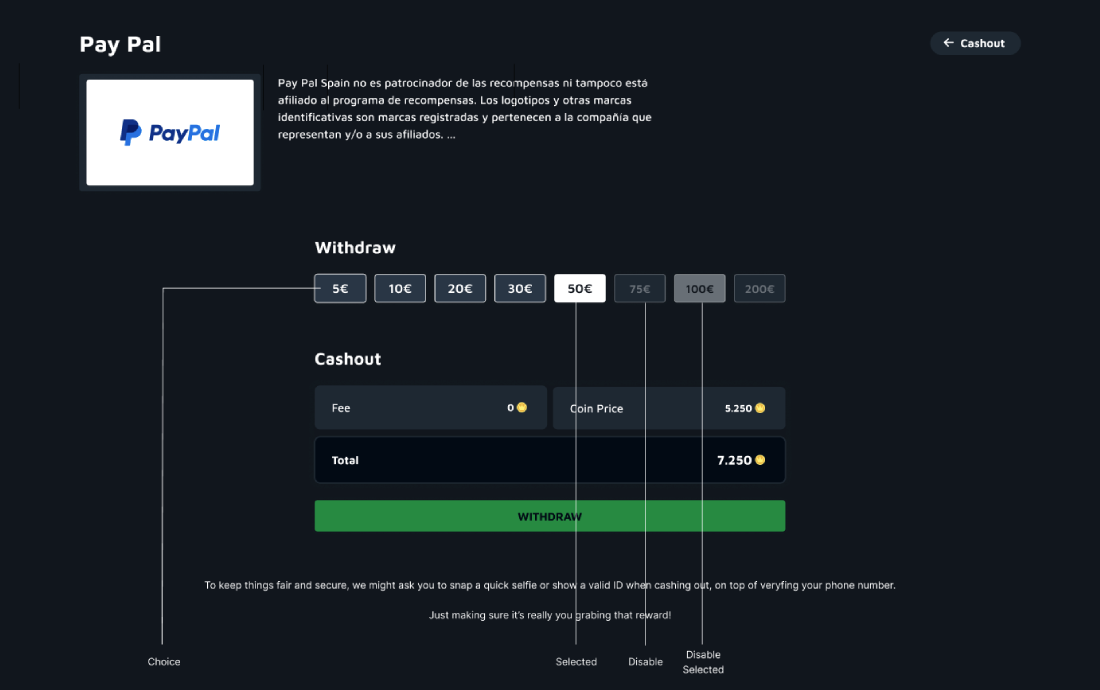
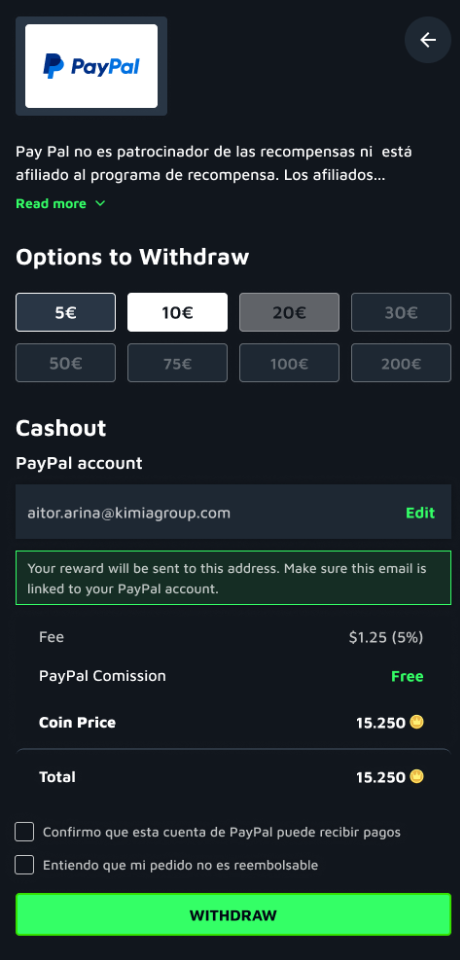
Clarifies eligibility, payout options, and fee structures through explicit states, reducing user frustration at the most critical moment of the experience.
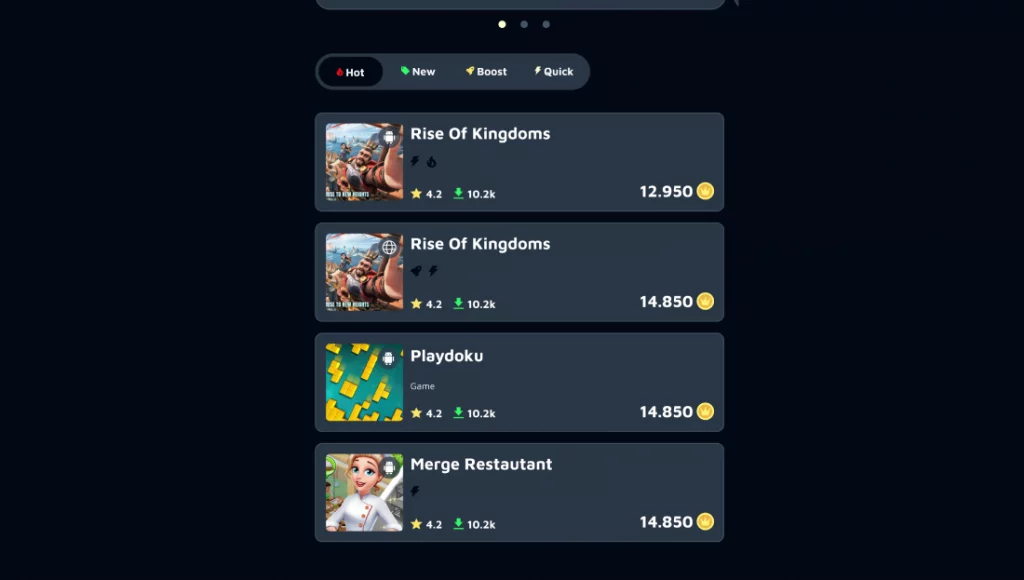
Card info + Sorting
Breaks down complex reward structures into clear, actionable layers, separating steps, rewards, and requirements to avoid cognitive overload.
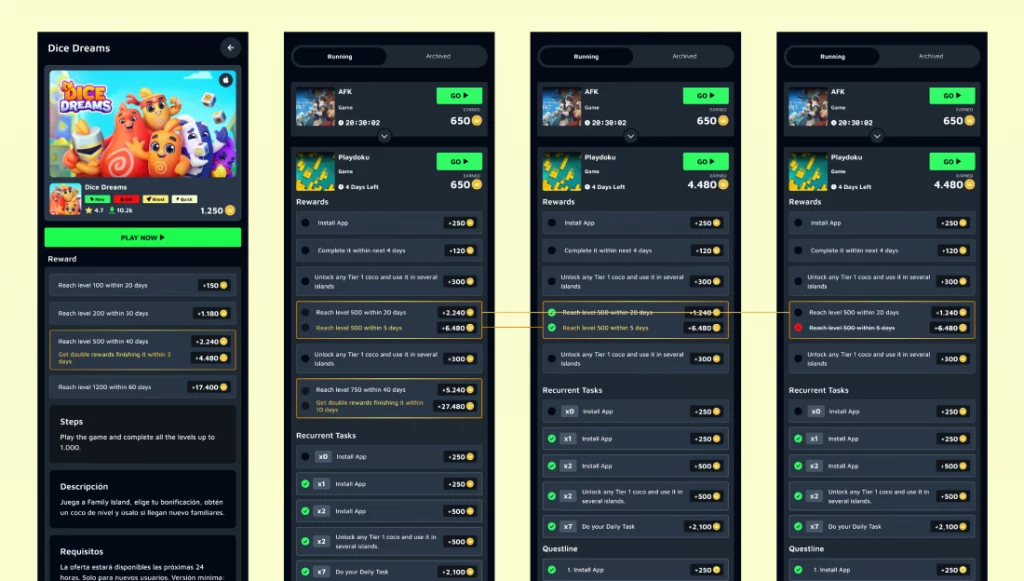
Recurrent Purchase
Provides continuous, glanceable feedback on user progress, reinforcing motivation and encouraging task completion within short mobile sessions.
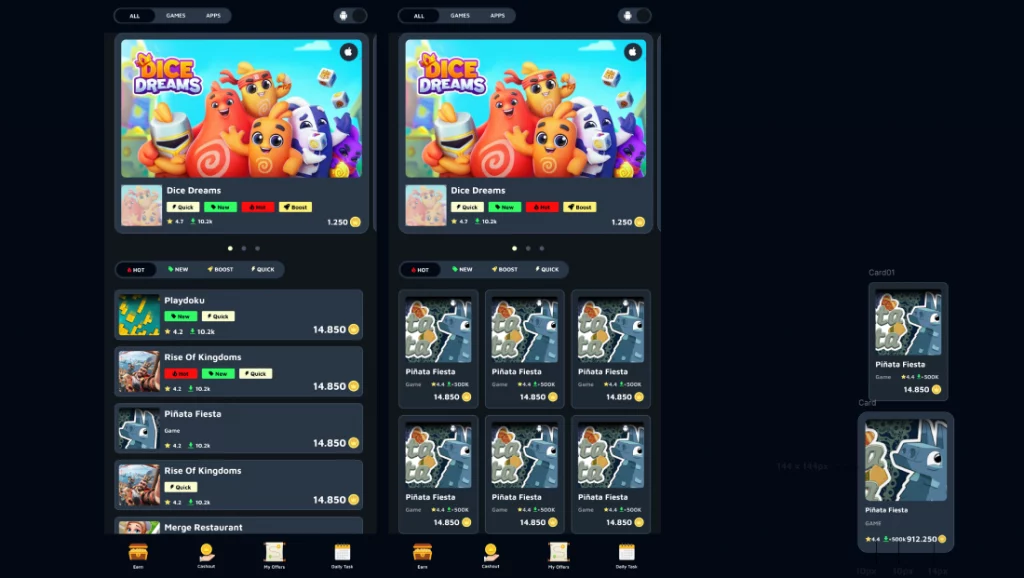
Card Design
Enables users to quickly evaluate earning opportunities by making reward value and effort immediately understandable within constrained mobile screens.
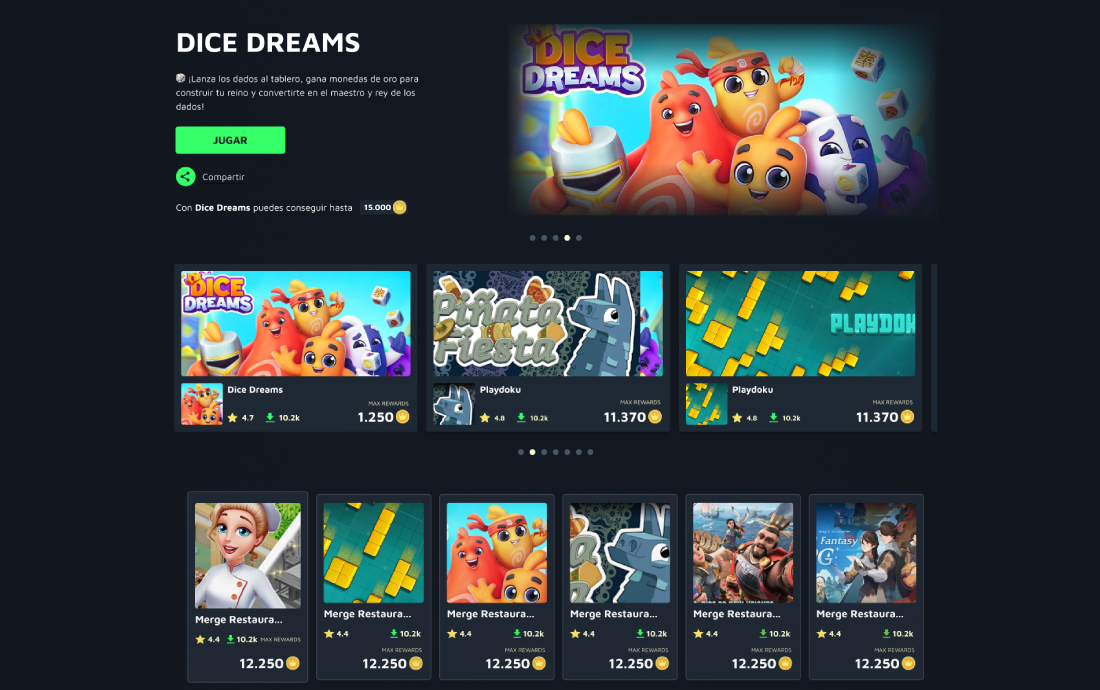
Challenge:
High information density and poor comparability between offers.
Solution:
Simplified card structure, reward clarity (coins → dollars), and scalable categorization system.
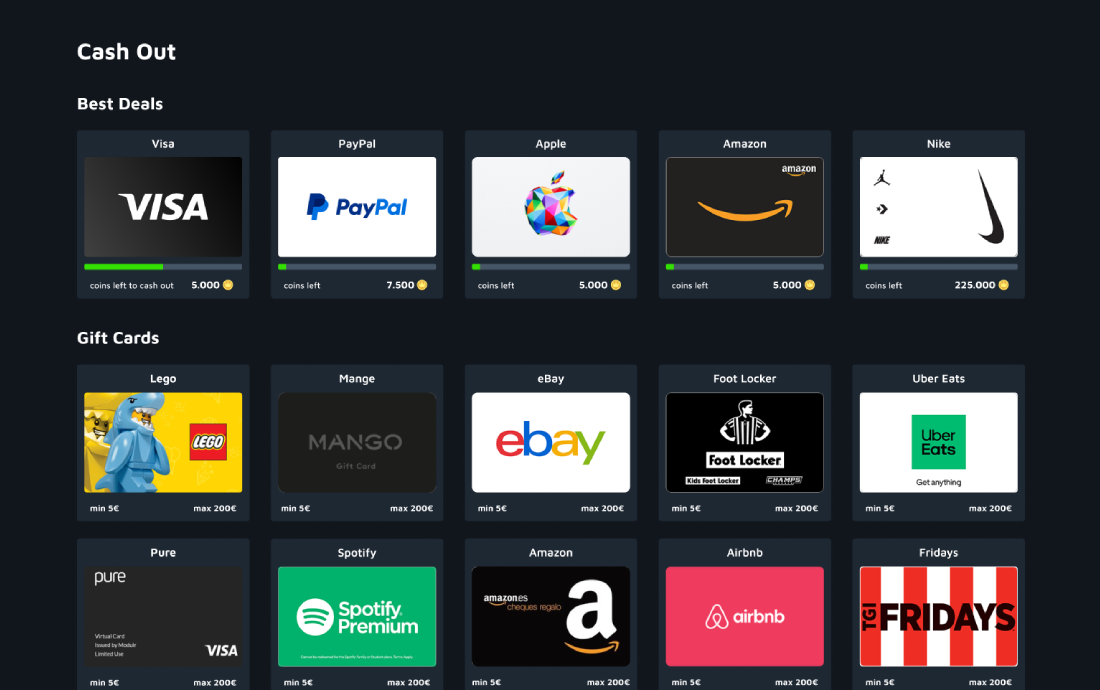
Challenge
The highest friction moment in the product. Users believed they had “enough money” when fees made cashout impossible. Disabled states and eligibility were unclear. Needed to show payout options (PayPal, VISA, Apple…) without overwhelming the user.
Solution:
1. Insufficient balance 2. Minimum-only eligible 3. Eligible for multiple amounts
Challenge:
Users misunderstood eligibility and payout conditions.
Solution:
Clear availability states, predefined amounts, and transparent fee breakdown.
Challenge:
High information density and limited visibility made it difficult to compare offers on small screens.
Solution:
Reduced visual complexity, converted rewards to dollars for clarity, and introduced categorization and filtering to improve comparison and scalability.

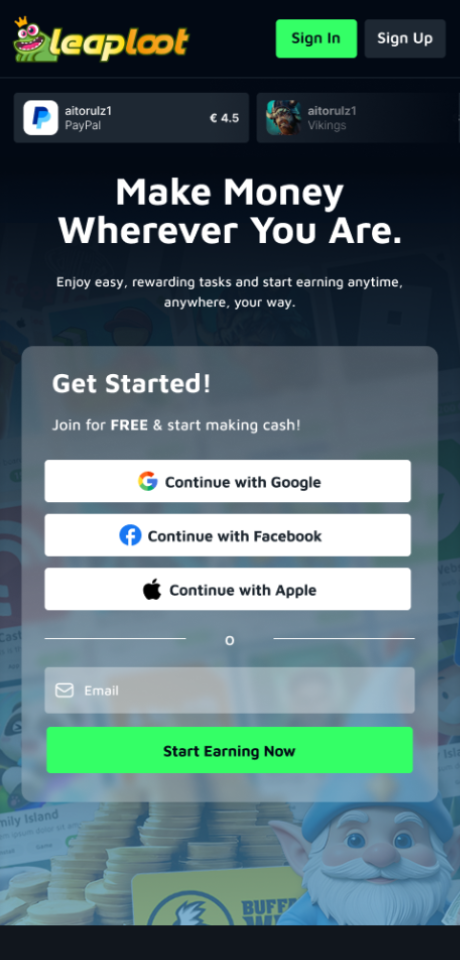
Challenge:
Low motivation and unclear earning logic.
Solution:
Motivational entry point, real-time stats, and visible tier progression.
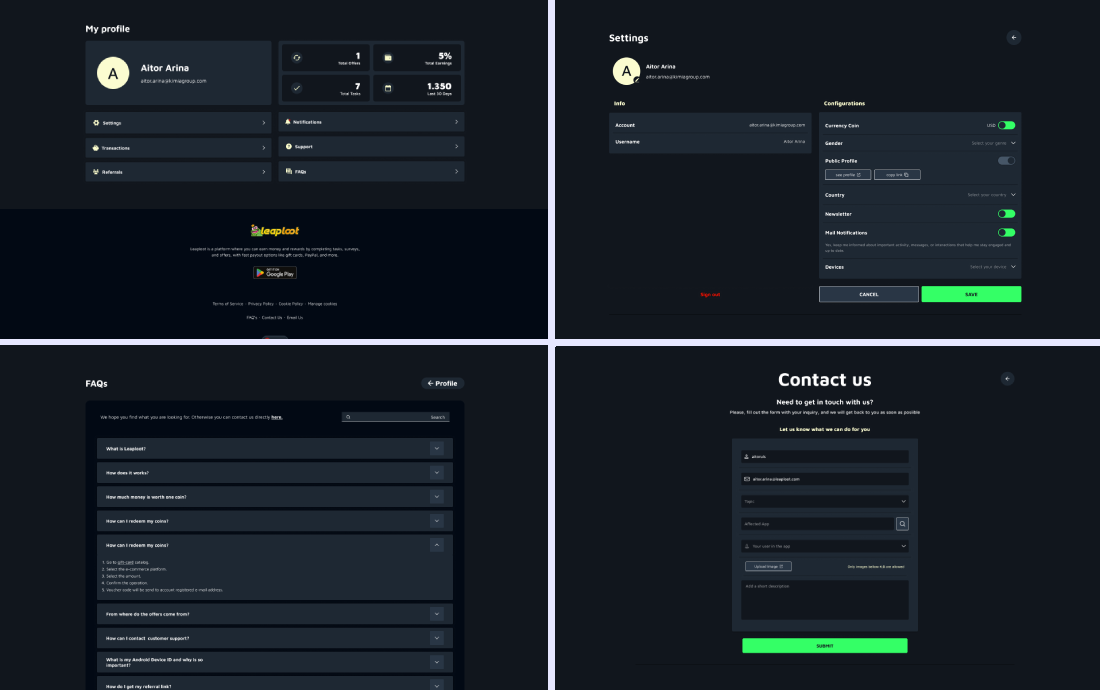
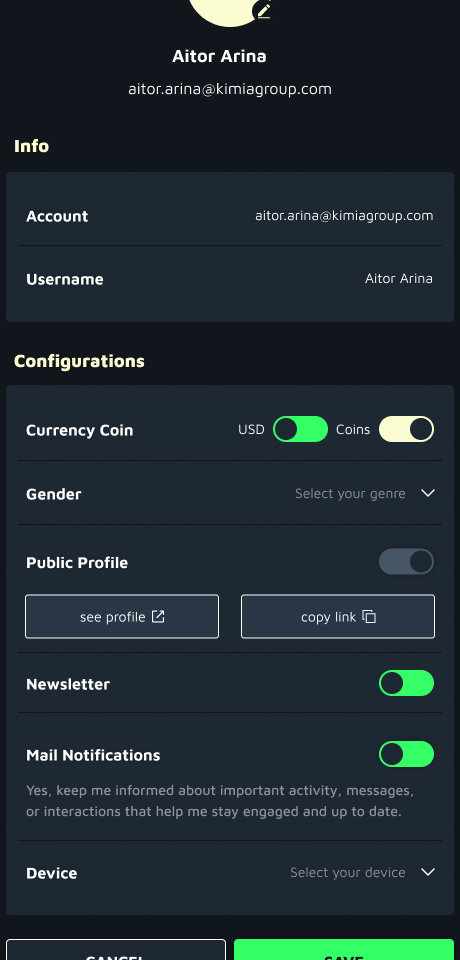
Challenge:
Fragmented configuration across multiple sections.
Solution:
Unified settings hub with clear grouping and fast access to key actions.
The same earning logic, progression clarity, and motivational feedback were preserved across all mobile flows.

 Outcome Learnings